5 ways to choose fresh seafood and avoid chemically treated products
Secrets
|
10 August 2026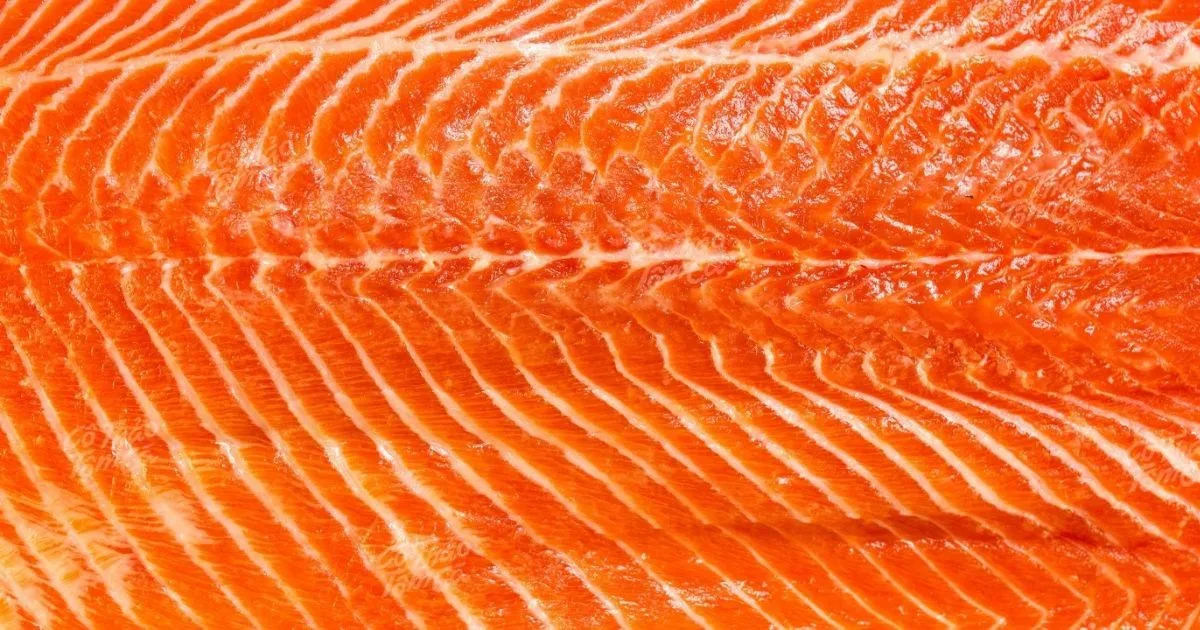
Have you ever bought shrimp that looked perfectly glossy and fresh, only to find the meat mushy and lacking its natural sweetness after cooking? Or spent good money on a crab that seemed packed with meat, only to discover that it was mostly water inside? The concern over stale or chemically treated seafood is something many consumers share. It is an everyday challenge for home cooks and young people preparing their own meals in Ho Chi Minh City.
This article will help you become a smarter seafood shopper without requiring years of experience. You will learn how to choose fresh seafood across five common categories: shrimp, crab, saltwater fish, squid, and clams - shellfish - snails, as well as how to spot seafood that may have been treated with urea or formaldehyde.
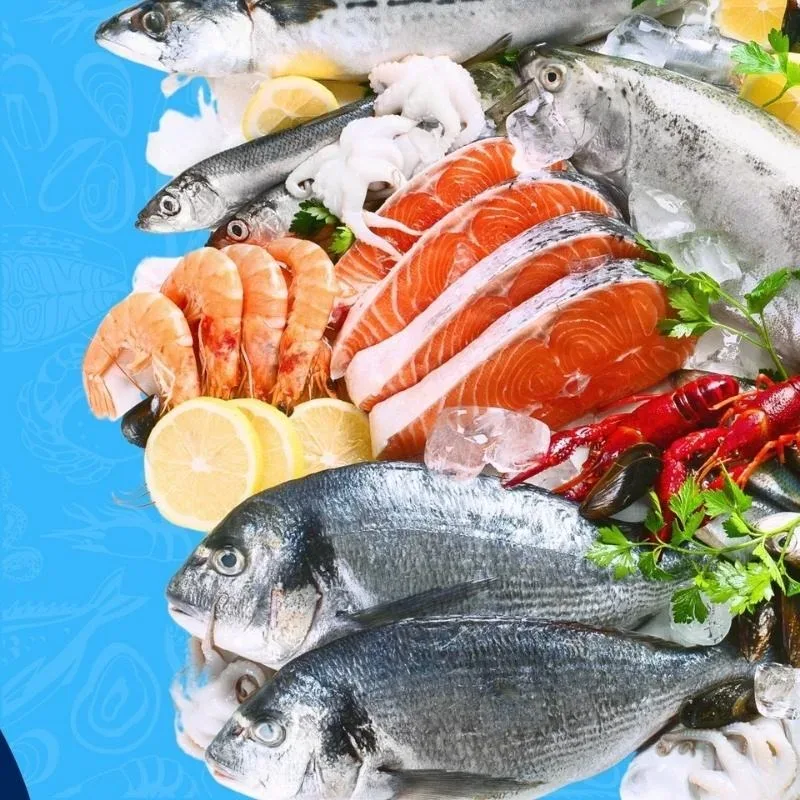 5 ways to choose fresh seafood and avoid chemically treated products
Suggested image: An early-morning seafood market in Ho Chi Minh City, with shrimp, crab, fish, and squid displayed on market stalls under warm lighting. Close-up composition, bright and natural tones, realistic atmosphere.
How to choose fresh shrimp: check the connection between the head and body
Shrimp is one of the easiest types of seafood to buy, but it is also one of the easiest to misjudge. Experienced sellers may know how to display shrimp so that they still look fresh even after sitting overnight. So, what should you look for?
The first and most important thing to check is the connection between the shrimp’s head and body. Fresh shrimp should have the head firmly attached to the body, without looseness or dark discoloration around the neck.
-
Shell and color: Fresh shrimp should have a translucent shell, with a naturally bluish-grey color for tiger prawns or pale pink for whiteleg shrimp. Chemically treated shrimp, by contrast, may appear unusually glossy, with an unnaturally uniform white or red color.
-
Spacing between segments: Fresh shrimp have tightly connected body segments and firm flesh. Stale shrimp or shrimp that have been treated for an extended period may have widened gaps between segments, distorted bodies, and a soft or mushy texture.
-
Smell: Fresh shrimp should carry a mild, naturally briny aroma of the sea without an unpleasant fishy odor. If you notice a strong ammonia smell or an unusual chemical odor, it is best to avoid them.
-
Firmness: Gently press the shrimp’s body with your finger. Fresh shrimp should feel firm and quickly return to their original shape.
-
Eyes: Fresh shrimp should have glossy black, clear eyes without cloudiness.
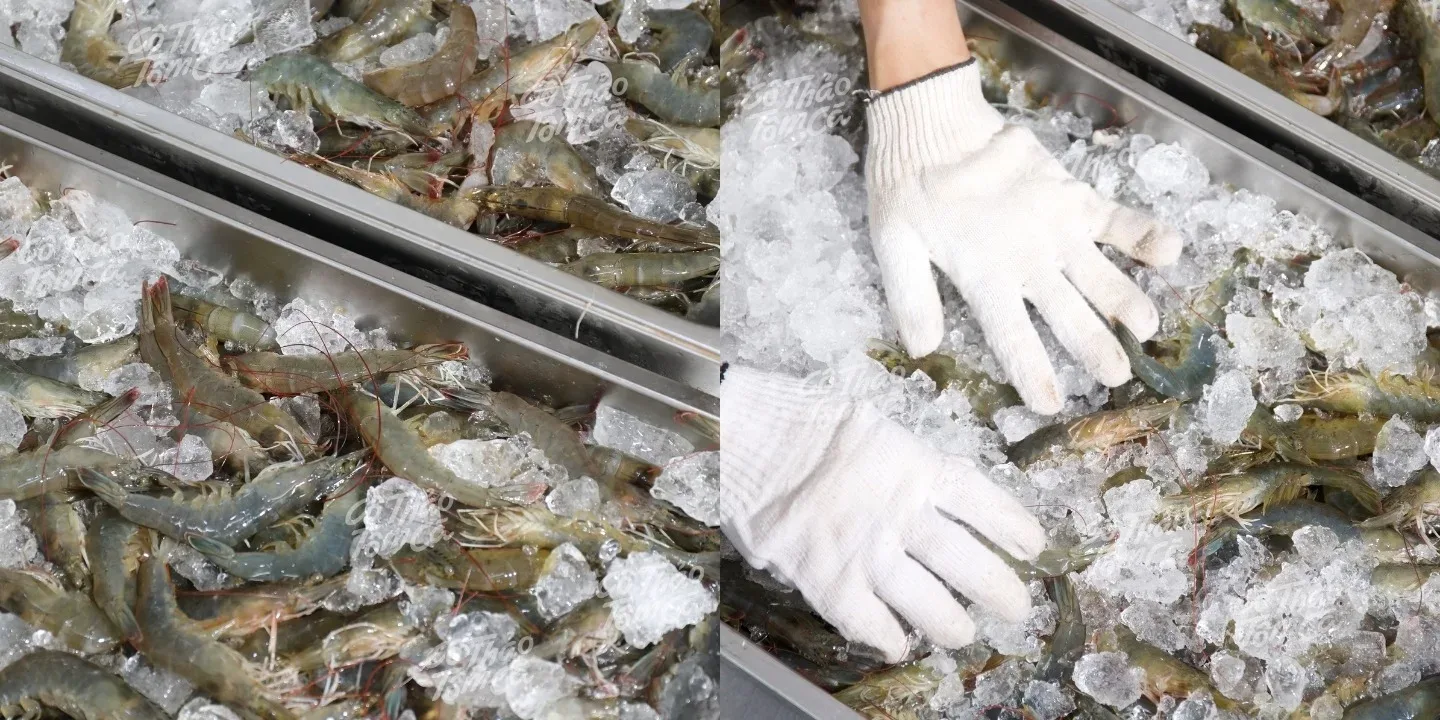 Fresh shrimp should have translucent shells and glossy black eyes without cloudiness
How to choose meaty crab and roe crab with confidence
Crab is one of the seafood products that shoppers worry most about getting wrong. Without knowing how to choose fresh seafood, you could end up buying a crab that is hollow, low in meat, or lacking roe – wasting both money and a good meal.
Sea crab
To determine whether a sea crab is packed with meat, pick it up. If it feels heavy relative to its size, it is generally a good sign that the crab is meaty. If it feels unusually light, the flesh inside may have shrunk or the crab may be entering a molting stage.
-
Press the abdominal flap: If the flap feels firm and does not sink inward, the crab is likely to contain plenty of meat. A soft or springy flap may indicate a hollow or watery crab.
-
Check the legs and claws: A live crab should have all its legs intact and move actively. If the crab is dead or has broken claws, ask the seller for more information before purchasing.
-
Check the shell: Gently press both sides of the crab shell. A firm shell generally indicates fuller meat, while a shell that dents or feels springy can indicate a hollow crab with less meat.
-
Shell color: Fresh sea crab naturally has a dark green or greyish shell. Crab that has died or been improperly stored may appear pale or develop unusual spots.
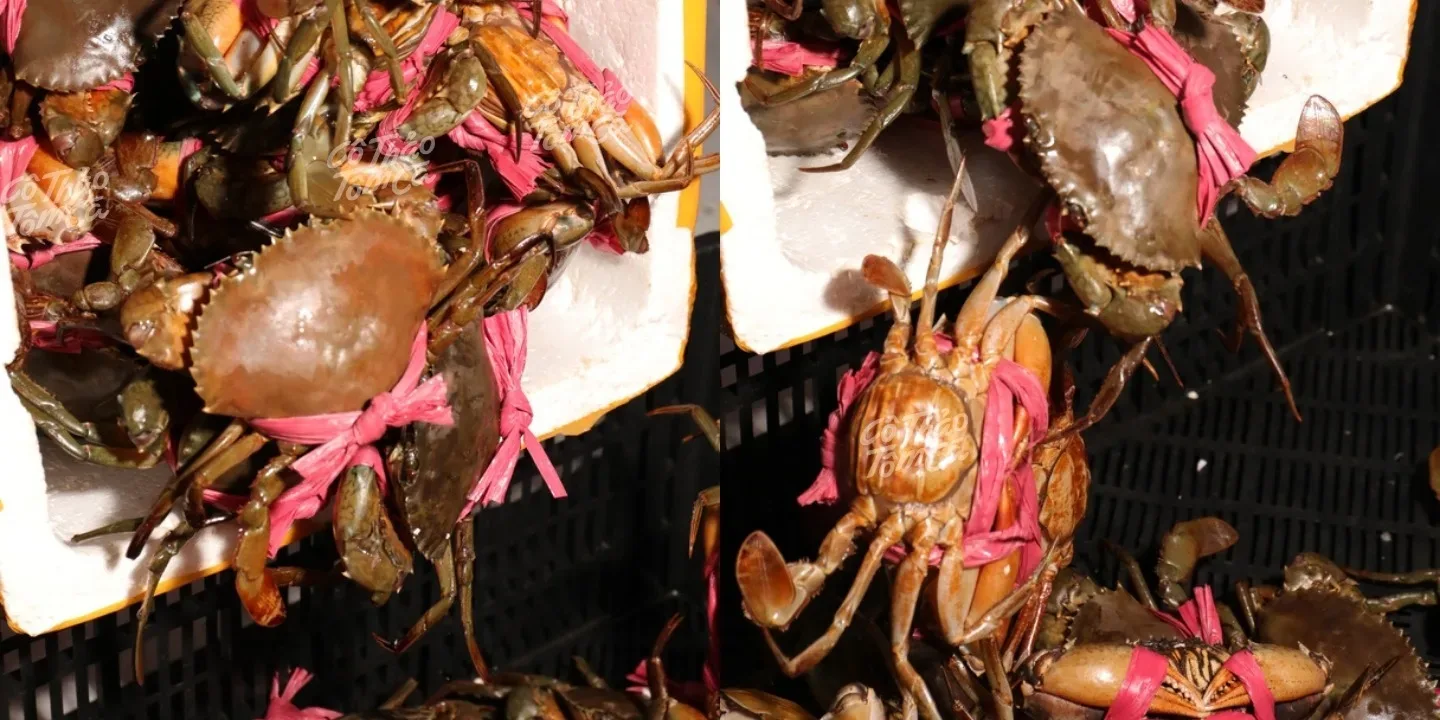 A meaty sea crab has a dark green shell, feels firm when pressed, and moves actively
Roe crab
The real appeal of Roe Crab lies in the rich orange roe inside its shell rather than the meat alone. That means the selection process is slightly different.
-
Turn the crab over and examine the abdominal flap: Female roe crabs have a broad, rounded flap, unlike the narrower triangular flap of male crabs. If the flap looks full and slightly swollen, with a pale orange-yellow color visible around the edges, the roe inside is likely to be abundant. A flat flap usually indicates less-developed roe.
-
Pick it up and shake gently: If you do not hear water sloshing inside, the crab is likely to be firm and full of roe.
-
Buy live crab whenever possible: Keeping the crab alive helps preserve the rich, creamy texture of the roe and prevents it from becoming loose or watery.
-
Distinguish natural roe crab from water-injected crab: Water-injected crab may have an unusually swollen abdomen. Once cooked, the meat tends to shrink, release a lot of water, and taste bland. Naturally full roe crab, on the other hand, develops its characteristic aroma and rich sweetness after cooking.
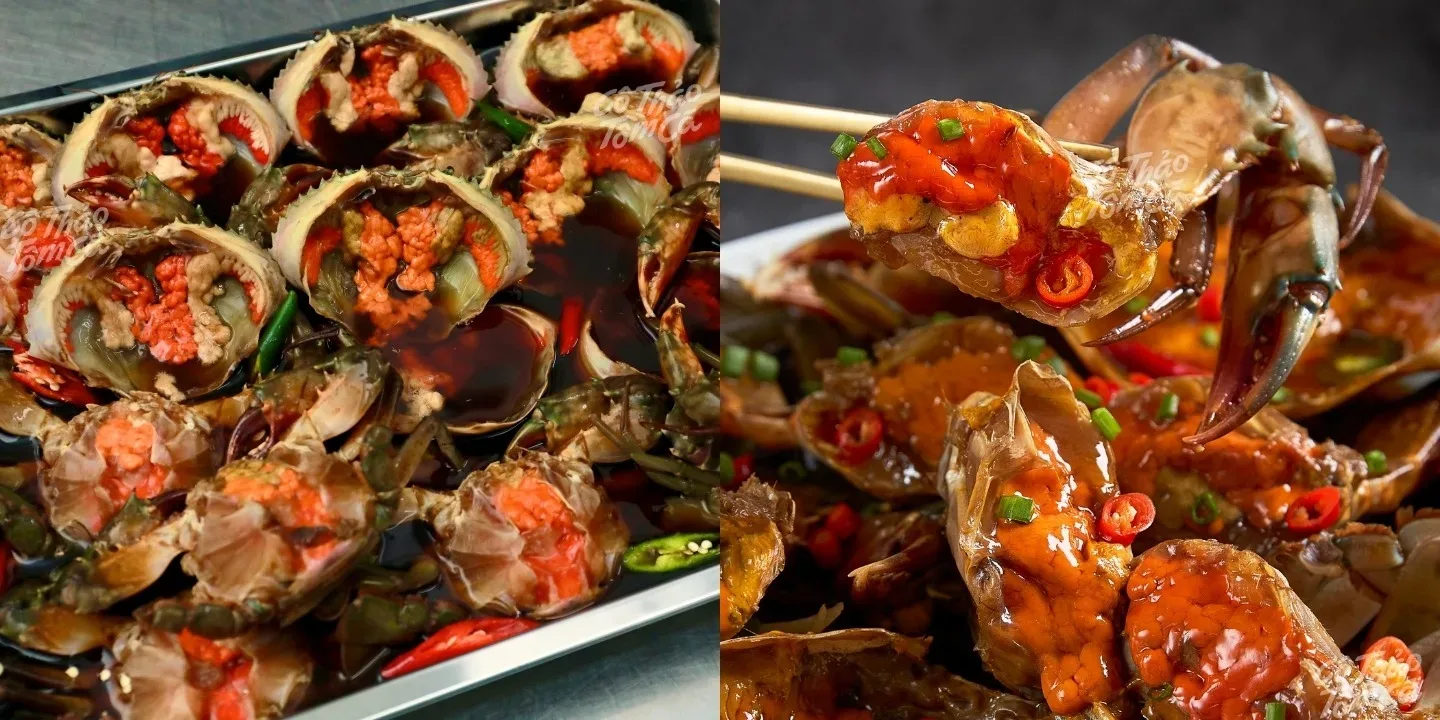 Fresh Ca Mau Roe Crab with a firm abdominal flap, dark green shell, and abundant orange roe
How to identify fresh saltwater fish by the eyes and gills
When buying saltwater fish, you have an advantage compared with shrimp and crab because freshness can be assessed through several visible characteristics.
-
Fresh fish should have clear, slightly protruding eyes with clearly visible pupils. Fish that has been stored for too long may develop cloudy, sunken eyes or a milky-white film over the surface.
-
Bright red or deep pink gills generally indicate fresher fish. Brown or grey gills, particularly when covered in thick mucus, can indicate that the fish has been improperly stored for an extended period.
-
The scales of fresh fish should remain firmly attached to the skin and should not fall off easily when touched. The skin should retain its natural silver sheen or species-specific coloration without unusual pale or discolored patches.
-
Press the thickest part of the fish along its back. Fresh flesh should feel elastic and spring back quickly. If the indentation remains, the fish has begun to lose its original texture.
-
Fresh fish should have a mild sea-like smell. Spoiled fish may give off a strong ammonia or unpleasant fishy odor.
-
The belly should be firm and relatively flat rather than swollen. A bloated abdomen may indicate internal decomposition.
For imported salmon intended for raw consumption, such as Norwegian salmon prepared for sashimi-style dishes, the criteria are stricter than for ordinary saltwater fish. The flesh should have a fresh pink-orange color with evenly distributed white marbling and no grey or unusually pale patches. The source article additionally specifies continuous chilled storage at 0–2°C from import to delivery.
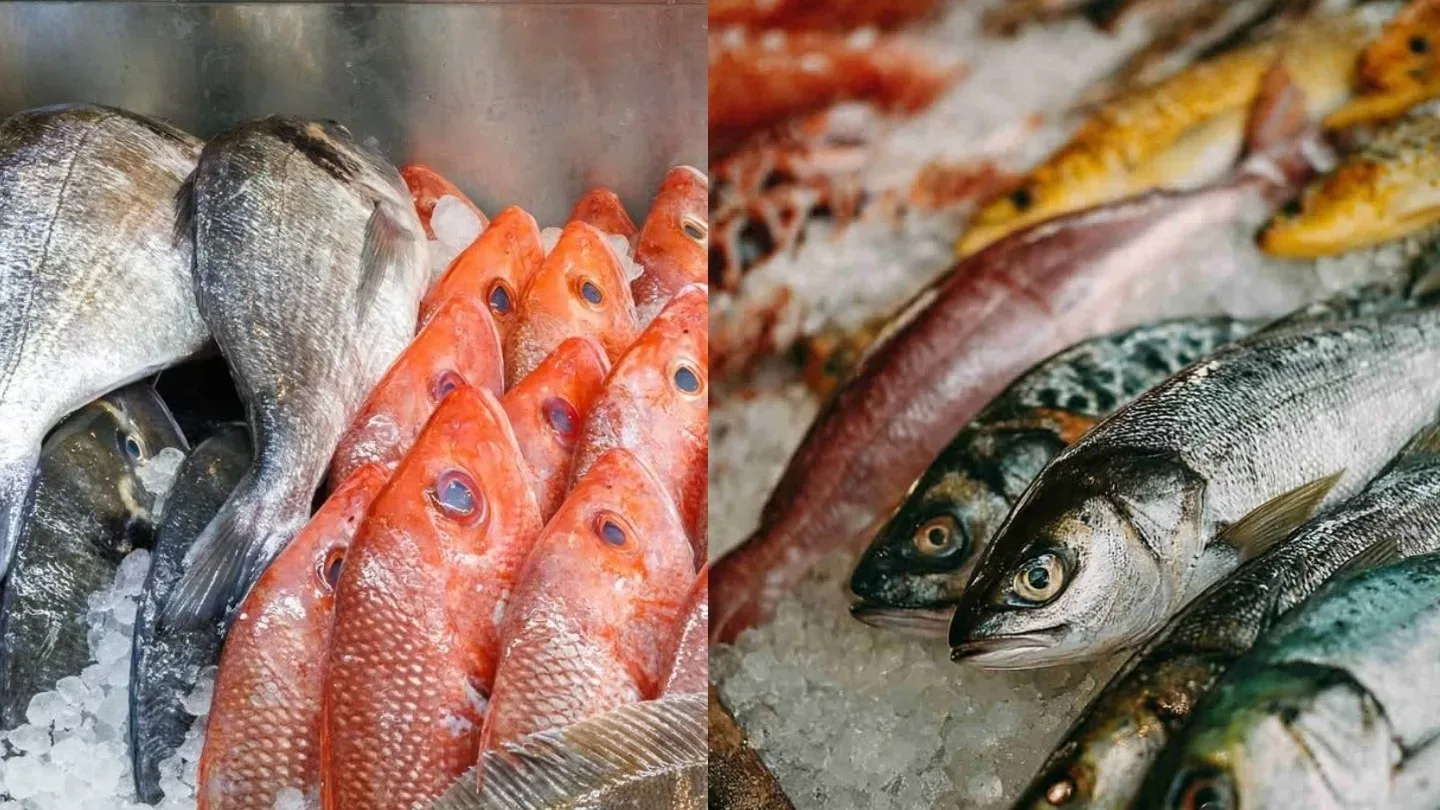 Fresh saltwater fish should have naturally pink-red gills and firm, elastic flesh
How to choose fresh squid
Fresh and stale squid can sometimes look surprisingly similar. However, there are several characteristics worth checking:
-
Tube Squid: The body should be translucent or slightly milky white, without yellow or brown discoloration. The ink sac should remain intact, the flesh should feel firm and elastic, and the eyes should be glossy black rather than cloudy.
-
Cuttlefish: The outer skin should remain intact, with its natural purple-brown or pink-orange tone. The flesh inside should be thick, firm, and white. The internal cuttlebone should remain intact and firmly positioned inside the body.
-
Bigfin Reef Squid: The body should be flat with its characteristic dark brown coloration, without unusually pale areas or excessive slime. The flesh should feel firm rather than soft and mushy.
-
Smell: Fresh squid should have only a mild sea aroma rather than a strong fishy smell. Avoid squid with a pungent ammonia or unusual chemical odor.
According to the source article, possible signs of chemically treated squid include an unnaturally bright white appearance, loss of natural markings, unusually soft flesh, and excessive slime. It may also shrink considerably and release a large amount of water during cooking.
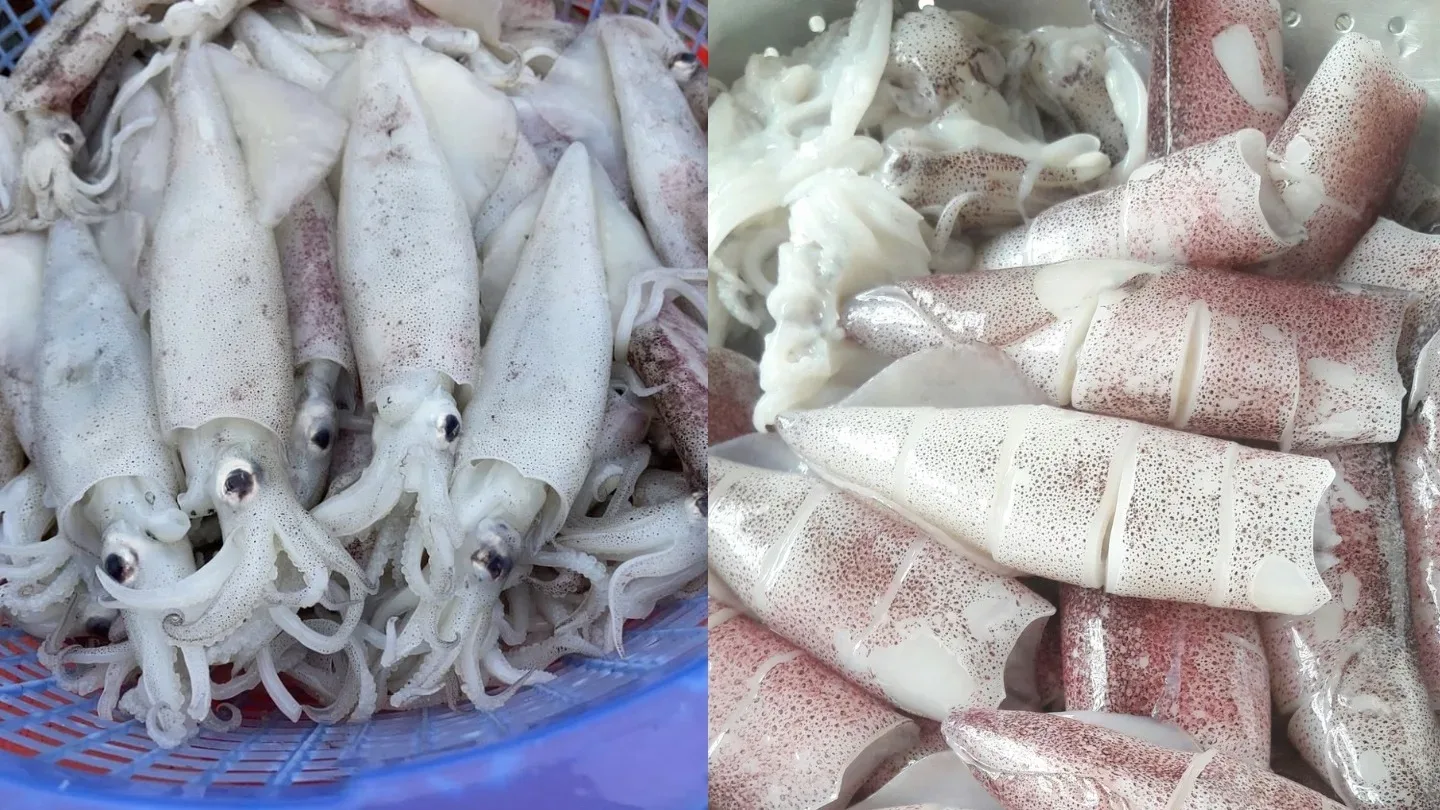 Fresh squid with a naturally milky-white body and firm skin
How to choose fresh clams, shellfish, and snails
For this group of seafood, the simplest rule is straightforward: choose the ones that are alive and discard the ones that are dead.
-
Fresh clams and shellfish: Their shells should remain tightly closed. If slightly open, they should close immediately when touched. The shells should also be intact without cracks or significant damage, while the water they are kept in should appear clean rather than cloudy or unusually colored.
-
Fresh Blood Cockles: The shells should be dark brown to black and feel relatively heavy in your hand. When shaken gently near your ear, there should be no hollow sound. The flesh should be deep red, firm, and firmly attached to the shell.
-
Fresh snails: Live snails should keep their operculum tightly closed, or the flesh should retract quickly when touched. Depending on the species, the shell should retain its natural dark green or light brown color without an unusual slimy coating.
For storage, the source article recommends preparing and eating clams and shellfish on the same day, ideally within 4–6 hours. Leaving them for too long at warm room temperatures of around 28–30°C can cause them to die quickly and increase food-safety risks.
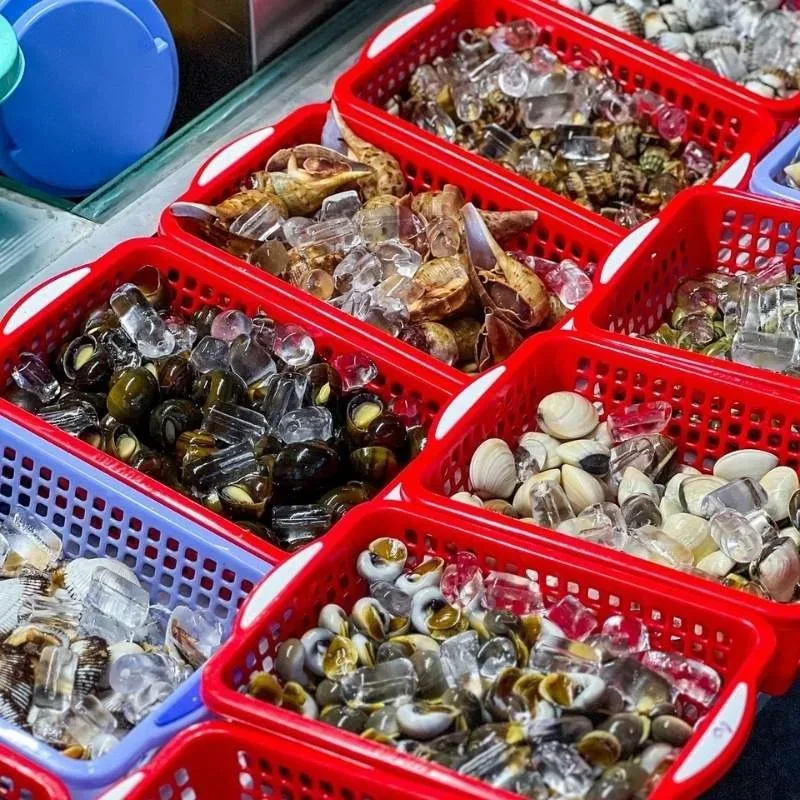 Fresh clams, Blood Cockles, and snails with tightly closed shells that react when touched
Warning signs of seafood potentially treated with chemicals such as urea or formaldehyde
The source article identifies several sensory signs that may raise suspicion about chemically treated seafood, including unusual coloration, strong chemical or ammonia-like odors, unnaturally firm flesh, excessive glossiness, and unusual changes during cooking.
|
Warning sign |
What to look for |
Potential concern described in the source |
|
Unusual coloration |
Shrimp or squid looks excessively white or uniformly red, with little natural variation. |
May indicate chemical treatment; the source associates consumption with gastrointestinal irritation. |
|
Chemical or ammonia-like smell |
Strong ammonia or unfamiliar pungent odor, especially when smelled at close range. |
May indicate deterioration or chemical exposure. |
|
Unnaturally firm flesh |
Seafood that has been dead for hours still feels unusually firm. |
May indicate artificial treatment intended to preserve texture. |
|
No natural seafood smell |
Seafood has virtually no characteristic smell even before preparation. |
May make sensory assessment of freshness more difficult. |
|
Unusual foam or smell when boiling |
Thick, unusual foam develops during cooking together with an unfamiliar odor. |
The source identifies this as a potential warning sign. |
|
Significant shrinkage during cooking |
Seafood shrinks dramatically and releases a large amount of water. |
May suggest excessive water retention or prior treatment. |
|
Overly glossy skin or shell |
Shrimp shells or fish skin look unnaturally shiny and lack their normal surface characteristics. |
May indicate treatment or improper preservation. |
These signs are presented in the source as practical indicators rather than laboratory confirmation of a specific chemical.
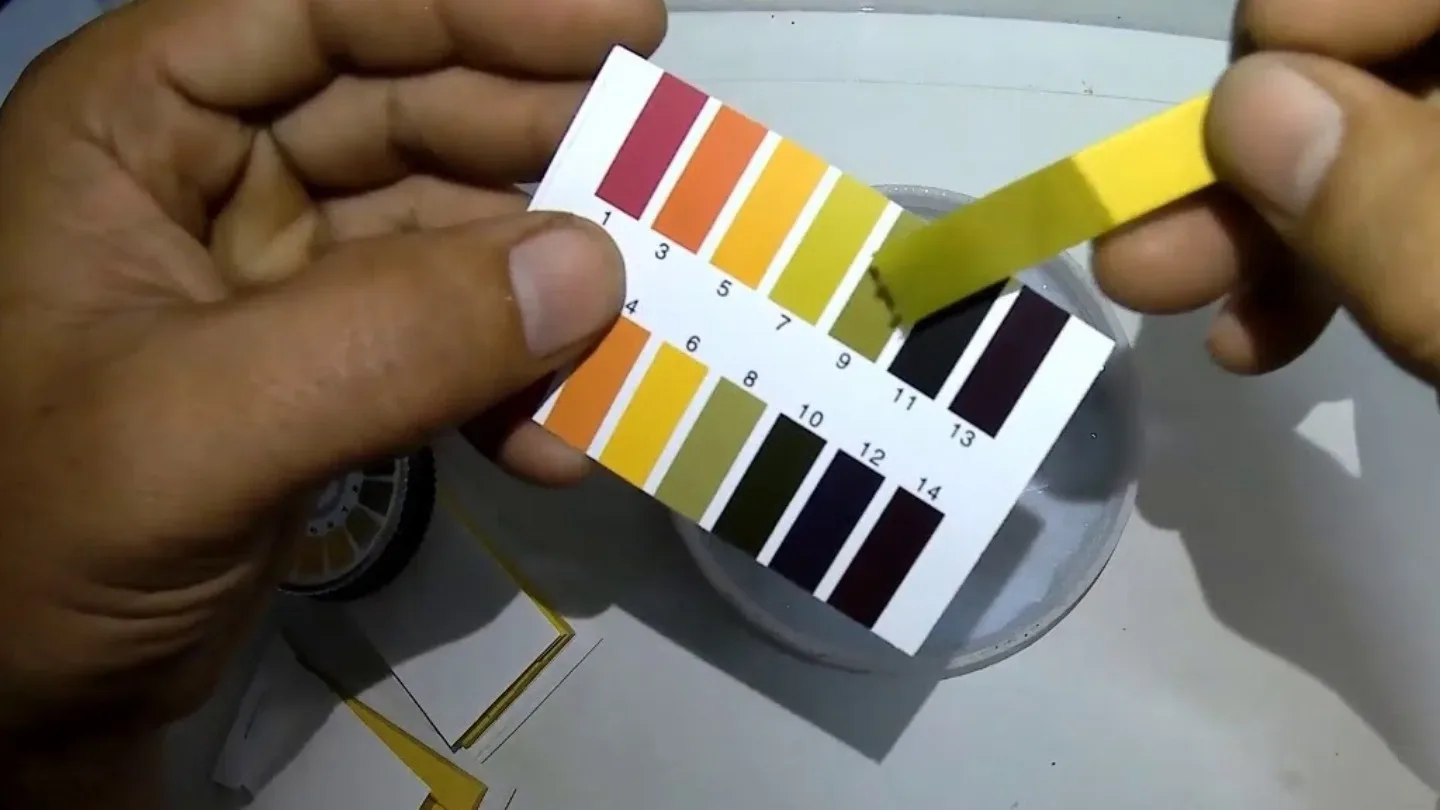 Checking seafood carefully before purchasing
Choose right once, enjoy every bite
Chemically treated or poor-quality seafood may sometimes reveal itself through unusual color, smell, texture, or changes during cooking. Knowing how to choose fresh seafood is therefore not only a skill for professional chefs but also useful everyday knowledge for anyone shopping and cooking for themselves or their family.
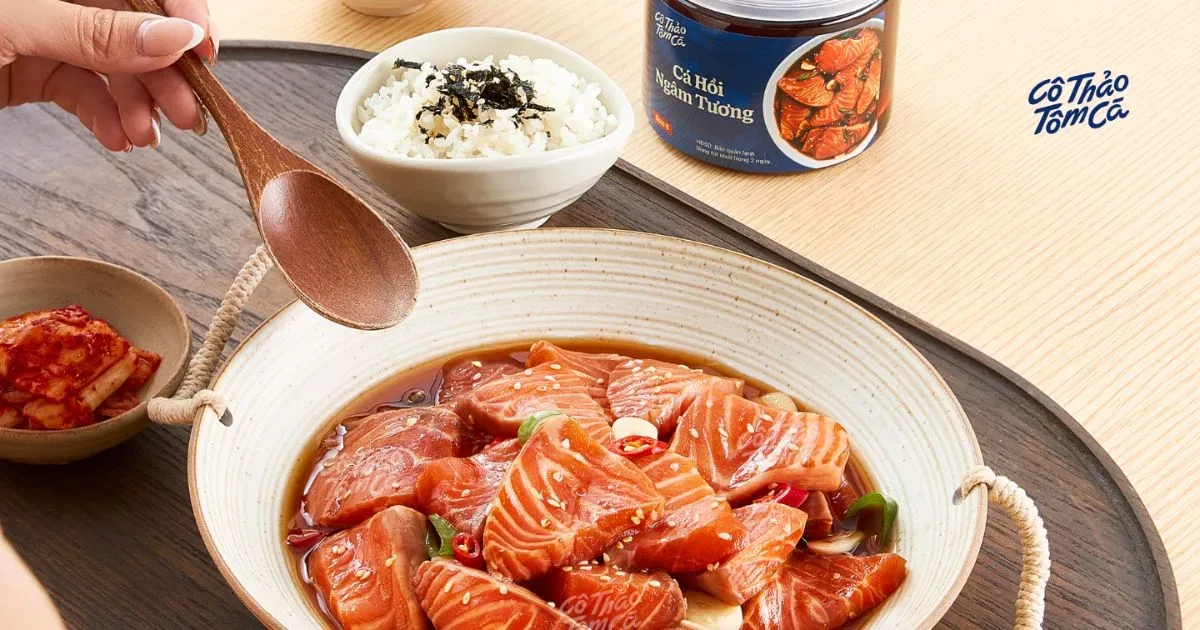
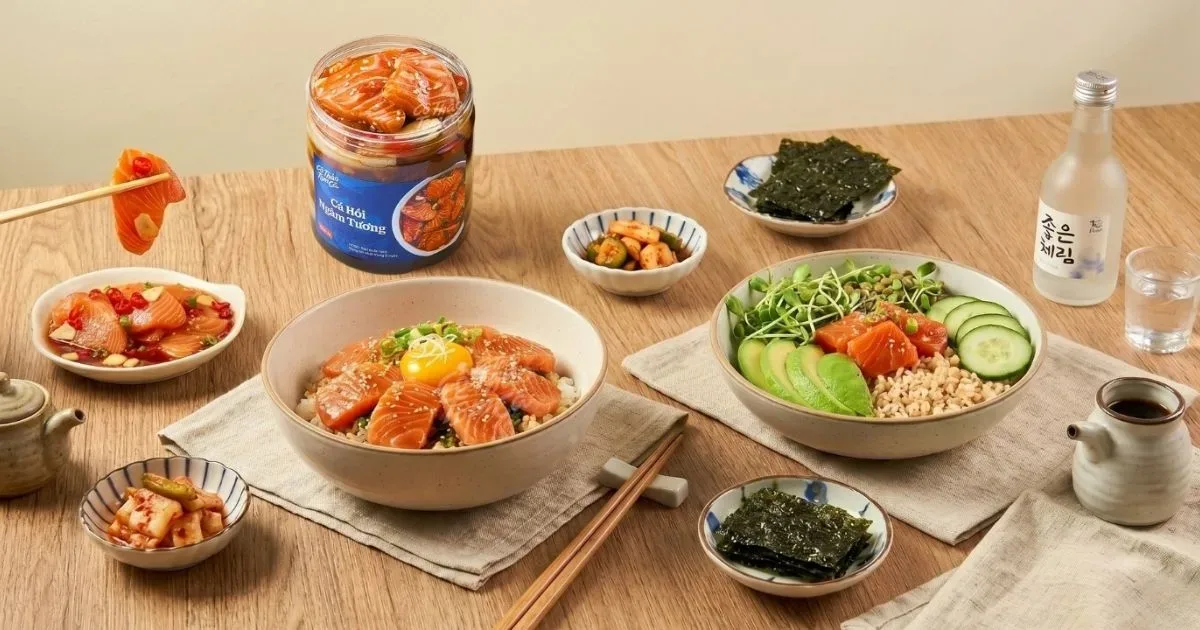
Too busy to carefully select seafood yourself every day? That is where Co Thao Tom Ca comes in.
With more than 6 years of experience in the food industry, Co Thao Tom Ca focuses on carefully selected seafood prepared fresh for its products. According to the brand information in the source, its products have a short shelf life of only 2 days, reflecting its 3 NOs commitment: no preservatives, no harmful additives, and no old stock kept for resale.
Explore the Co Thao Tom Ca product range to discover more seafood options.
CO THAO TOM CA - EVERY CARE, EVERY BITE, EVERY DAY
-
Branch 1: 42/2 Tran Dinh Xu, Co Giang Ward, District 1 (Takeaway)
-
Branch 2: 39 Than Nhan Trung, Ward 13, Tan Binh District (Takeaway)
-
Branch 3: 69A Truong Van Thanh, Hiep Phu Ward, Thu Duc District (Takeaway)
-
Branch 4: 197 Hoang Sa, Tan Dinh Ward, District 1 (Takeaway)
-
Branch 5: 1073 Phan Van Tri, Go Vap District (Takeaway)
-
Hotline: 024.9999.7122
-
Fanpage: Co Thao Tom Ca
-
TikTok: @cothaotomca
-
Also available on: GrabFood, ShopeeFood, BeFood, and Xanh SM