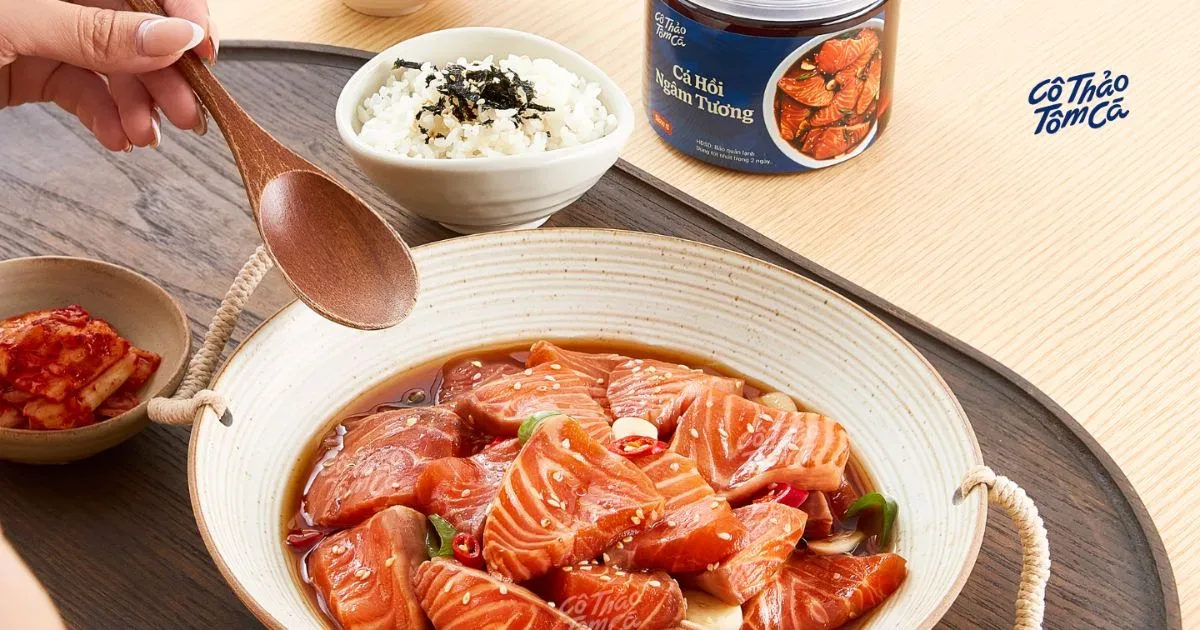
How many calories are in soy-marinated salmon? Is it suitable for weight loss?
Secrets
|
05 august, 2026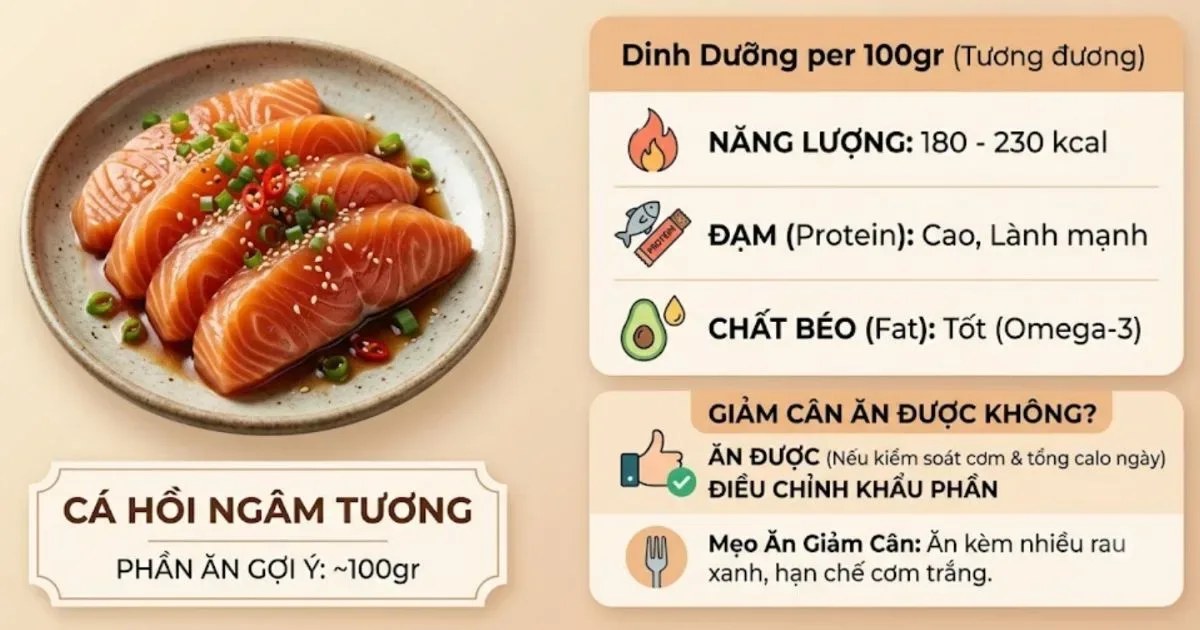
Soy-marinated salmon contains approximately 180-230 kcal per 100g, with most of its calories coming from protein and healthy fats. It is nutrient-dense rather than “empty calories,” so when enjoyed in an appropriate portion, it does not necessarily lead to weight gain. If you are trying to lose weight, you can still enjoy it by managing your rice portion and overall daily calorie intake.
This guide covers the estimated calorie count of soy-marinated salmon, the nutrients behind those calories, whether the dish is fattening, and practical ways to include it in a weight-loss diet.
How many calories are in soy-marinated salmon?
How many calories are in soy-marinated salmon?
Soy-marinated salmon provides approximately 180–230 kcal per 100g. The exact amount varies depending on the quantity of soy marinade and any toppings served with it. A typical portion of around 120–150g contains approximately 220–350 kcal.
Most of this energy comes from salmon itself, which contains roughly 208 kcal per 100g, with a small additional amount from sugar in the marinade. Compared with many common lunch dishes, soy-marinated salmon can be a moderately light yet satisfying option thanks to its high protein content.
 Can you eat soy-marinated salmon while losing weight?
Calorie and nutrition breakdown
The table below provides estimated calories and key nutrients for different serving sizes of soy-marinated salmon.
|
Serving size |
Calories |
Protein |
Fat |
Carbohydrates |
Sodium |
|
100g |
180-230 kcal |
~20g |
~12g |
~4g |
High, mainly from soy sauce |
|
Small portion (~120g) |
220-280 kcal |
~24g |
~14g |
~5g |
High |
|
Medium portion (~150g) |
270-350 kcal |
~30g |
~18g |
~6g |
High |
Most of the calories come from protein and fat, while carbohydrate content remains relatively low. Sodium is one factor to keep in mind if you are following a lower-sodium diet, as soy sauce is naturally salty.
What nutrients contribute to the calories in soy-marinated salmon?
The calories in soy-marinated salmon mainly come from three sources: protein from the salmon, omega-3 fats, and a small amount of sugar in the soy marinade. Protein and fat account for most of the total energy.
Which contributes the most calories? Fat, because each gram of fat provides 9 kcal, more than twice the calories per gram of protein or carbohydrates. However, much of the fat in salmon is unsaturated, including omega-3 fatty acids. Salmon provides around 2g of omega-3 per 100g, making these calories nutritionally different from those found in heavily fried foods.
Does soy-marinated salmon make you gain weight?
Soy-marinated salmon does not automatically cause weight gain as long as your total daily calorie intake stays within your body’s needs. Weight gain results from an overall calorie surplus, not from one particular food. With its high protein and relatively low carbohydrate content, soy-marinated salmon can fit well into a balanced weight-management plan.
It is true that salmon contains more calories than steamed vegetables because it is rich in both protein and fat. But that nutrient density can also help you stay full for longer and reduce the urge to snack shortly after a meal. A satisfying meal can sometimes support weight management better than a very low-calorie option that leaves you hungry again quickly.
 Soy-marinated salmon won't cause weight gain if calories balance out
Can you eat soy-marinated salmon while losing weight?
Yes, soy-marinated salmon can still be part of a weight-loss diet, as long as you manage your portion size and the amount of rice served with it. Its high protein content can help you feel fuller for longer and support muscle maintenance while reducing calorie intake.
How to enjoy soy-marinated salmon while losing weight
For a more weight-conscious meal, switch from white rice to brown rice, reduce the rice portion, and add more vegetables. Brown rice contains more fiber and can help you stay satisfied for longer.
You can also add kimchi and seaweed salad to make the meal feel more substantial without significantly increasing calories. Use the soy marinade in moderation if you are also trying to limit sodium intake.
When is the best time to eat it while losing weight?
Lunch or an earlier dinner can be practical times to enjoy soy-marinated salmon, especially when you are still active throughout the day. Eating late at night does not directly cause weight gain, but it may make it easier to exceed your daily calorie needs if you have already eaten enough earlier.
Ultimately, your total daily calorie intake matters more than the exact time you eat.
Comparing soy-marinated salmon calories with popular meals
Compared with many familiar lunch options, soy-marinated salmon sits in a moderate calorie range while providing relatively high protein. Here is a quick comparison from Co Thao Tom Ca.
|
Dish |
Calories per serving |
Protein |
Suitable for weight loss? |
|
Soy-marinated salmon (medium portion) |
270–350 kcal |
~30g |
Yes, with controlled rice portions |
|
Broken rice with pork chop |
600–700 kcal |
~25g |
Limit |
|
Fried chicken rice |
650–800 kcal |
~30g |
Limit |
|
Oily office lunch set |
500–700 kcal |
~20g |
Limit |
Soy-marinated salmon offers a relatively strong protein-to-calorie ratio compared with many fried dishes. If you want something satisfying without feeling overly heavy, it can be a balanced option.
How can you enjoy soy-marinated salmon while staying in shape?
Three simple adjustments can help: choose brown rice, keep the portion moderate, and add more vegetables. Together, these choices can make the meal more balanced without taking away from the experience.
Co Thao Tom Ca’s brown rice sets are portioned for one person, designed to feel satisfying without being too heavy. If you want to explore the full range of rice sets, view them here.
 Healthy soy-marinated salmon brown rice set
Frequently asked questions
Is soy-marinated salmon higher in protein or fat?
Soy-marinated salmon contains both protein and fat, with approximately 20g of protein and 12g of fat per 100g. Its high protein content makes it a useful option for people who exercise or want to maintain muscle. Much of the fat comes from omega-3 fatty acids rather than the fats typically associated with fried foods.
Does eating soy-marinated salmon at night cause weight gain?
Eating it at night does not directly cause weight gain. What matters most is your overall calorie intake across the day. If you have already eaten enough, simply reduce the rice portion at dinner.
A serving of soy-marinated salmon with a smaller amount of brown rice and some vegetables can make for a lighter evening meal.
Knowing how many calories are in soy-marinated salmon makes it easier to enjoy a favorite dish without overthinking every bite. Rich in protein and satisfying in flavor, soy-marinated salmon can be a rewarding yet balanced meal when portioned thoughtfully.
Co Thao Tom Ca also offers the option to switch to brown rice for diners who are watching their intake or trying to stay in shape. For recommendations on suitable rice sets, contact us below.
CO THAO TOM CA - EVERY CARE, EVERY BITE, EVERY DAY
-
Branch 1: 42/2 Tran Dinh Xu, Co Giang Ward, District 1 (Takeaway)
-
Branch 2: 39 Than Nhan Trung, Ward 13, Tan Binh District (Takeaway)
-
Branch 3: 69A Truong Van Thanh, Hiep Phu Ward, Thu Duc District (Takeaway)
-
Branch 4: 197 Hoang Sa, Tan Dinh Ward, District 1 (Takeaway)
-
Branch 5: 1073 Phan Van Tri, Go Vap District (Takeaway)
-
Hotline: 024.9999.7122
-
Fanpage: Co Thao Tom Ca
-
TikTok: @cothaotomca
-
Also available on: GrabFood, ShopeeFood, BeFood, and Xanh SM